London Tech Week 2026: Why Leadership and Culture Will Determine AI Success
- 8 Min Read
At London Tech Week 2026, leaders from Unilever, Bunq, Hardest Adventures, Scale Sustain and Founders HR explored what AI-first organisations will look like over the next five years and how culture can survive periods of rapid growth. Their discussions highlighted a common theme: while AI is transforming how organisations operate, long-term success will depend on leadership credibility, workforce adaptability, strong hiring practices and cultures built to scale.
- Author: HRD Connect
- Date published: Jun 12, 2026
- Categories

Artificial intelligence dominated the agenda at London Tech Week 2026, but beyond the discussion of emerging technologies and automation, a more important conversation emerged around the future of organisations themselves.
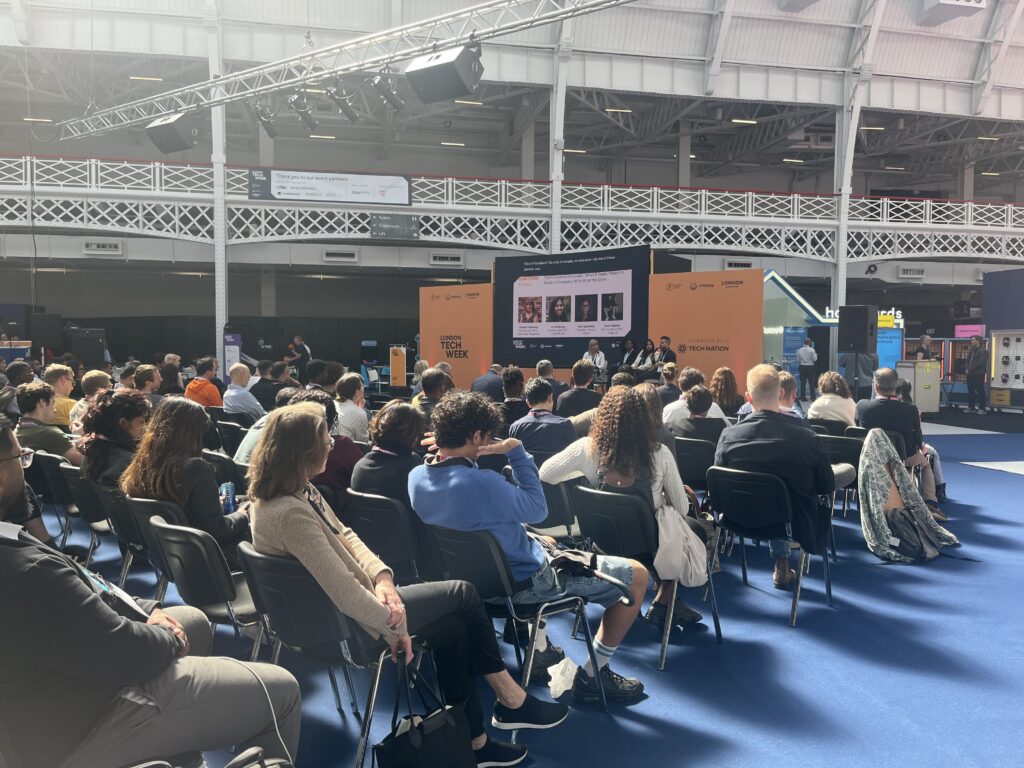
Across two sessions we attended, The Workplace in 2031: What Will AI-First Organisations Look Like Five Years from Now? and The Culture Tech Stack That Survives Hypergrowth, business leaders repeatedly returned to the same conclusion: technology may be transforming how work gets done, but leadership, culture and workforce adaptability will ultimately determine which organisations succeed.
The discussions reflected broader trends emerging across global workforce research. The World Economic Forum’s Future of Jobs Report 2025 found that technological change is expected to transform almost a quarter of existing jobs by 2030, while employers increasingly value adaptability, resilience and continuous learning alongside technical skills. Similarly, Deloitte’s 2025 Global Human Capital Trends report identified human capabilities and organisational agility as critical differentiators in an increasingly AI-enabled economy.
Moving from AI pilots to AI-first organisations
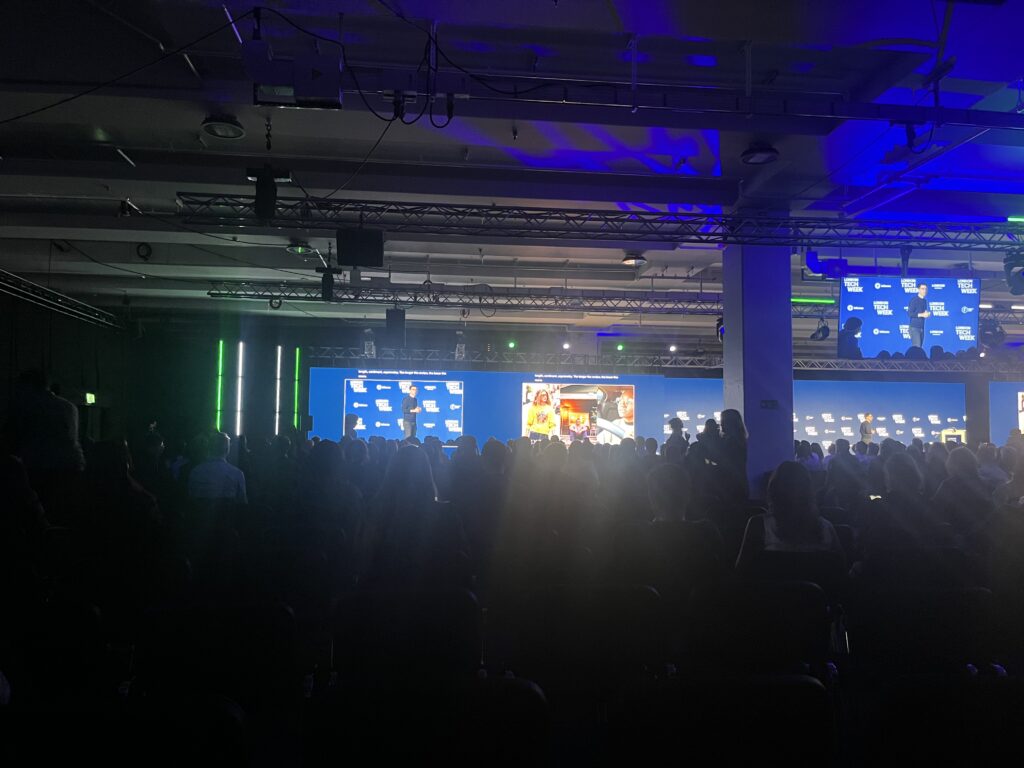
In a discussion moderated by Axel Threlfall, Editor at Large at Reuters, Sam Kini, Chief Digital & Technology Officer at Unilever, outlined how one of the world’s largest consumer goods companies is approaching AI transformation.
Rather than focusing on individual use cases, Kini described a strategy centred on embedding AI across demand generation, enterprise operations and employee enablement. The objective is to move beyond experimentation and integrate AI into the core processes that underpin the organisation. As Unilever continues to operate across more than 190 countries and manages a highly complex global business, scaling AI requires a fundamental rethink of how work is designed and delivered.
One of the most important insights was that AI transformation is becoming as much a people challenge as a technology challenge. Kini acknowledged that while employee sentiment towards AI is generally positive, organisations must recognise that large-scale transformation inevitably creates uncertainty. She argued that leaders have a responsibility to help employees understand where they fit within an evolving workplace and to support teams through what is likely to be one of the most significant periods of organisational change in decades.
This aligns closely with findings from PwC’s 2025 Global Workforce Hopes and Fears Survey, which found that employees remain optimistic about AI’s potential to improve productivity but continue to express concerns about skills relevance, workforce change and long-term career security. The research suggests that confidence in AI adoption is significantly higher when organisations invest in communication, learning and workforce support.
Leadership credibility will shape AI adoption
A recurring theme throughout the discussion was the role leaders must play in driving transformation.
Kini argued that becoming an AI-first organisation requires leaders to actively engage with the technology themselves rather than simply encouraging employees to do so. She described AI adoption as a leadership challenge as much as a technology challenge, noting that employees are far more likely to embrace new ways of working when leaders visibly use the tools themselves and demonstrate how they create value.
This observation reflects wider workforce trends. Microsoft’s 2025 Work Trend Index suggests organisations are increasingly evolving into what it describes as “Frontier Firms”, where AI is embedded into daily workflows and leaders are expected to orchestrate collaboration between people and intelligent systems. In this environment, leadership effectiveness depends not only on strategic direction but also on the ability to guide employees through continuous technological change.
Leadership development programmes increasingly need to combine digital literacy, change leadership and workforce communication capabilities, ensuring leaders can build trust while driving transformation.
Balancing innovation with governance
The discussion also highlighted the growing complexity associated with responsible AI adoption.
Kini pointed to increasing scrutiny around data governance, model regulation, hidden bias and geopolitical risk, all of which are becoming critical considerations for organisations operating across multiple markets. As AI becomes embedded into products, operations and decision-making processes, organisations face growing pressure to move quickly while maintaining appropriate levels of oversight and accountability.
This challenge is reflected in broader market trends. The World Economic Forum’s Global Risks Report 2026 identified technological disruption, misinformation and cyber risk among the most significant challenges facing organisations over the coming decade. For leaders, the ability to balance innovation with governance is rapidly becoming a core organisational capability rather than a purely technical concern.
Culture does not scale by accident
While the Unilever session focused on AI transformation, The Culture Tech Stack That Survives Hypergrowth explored how organisations can sustain culture during periods of rapid growth.
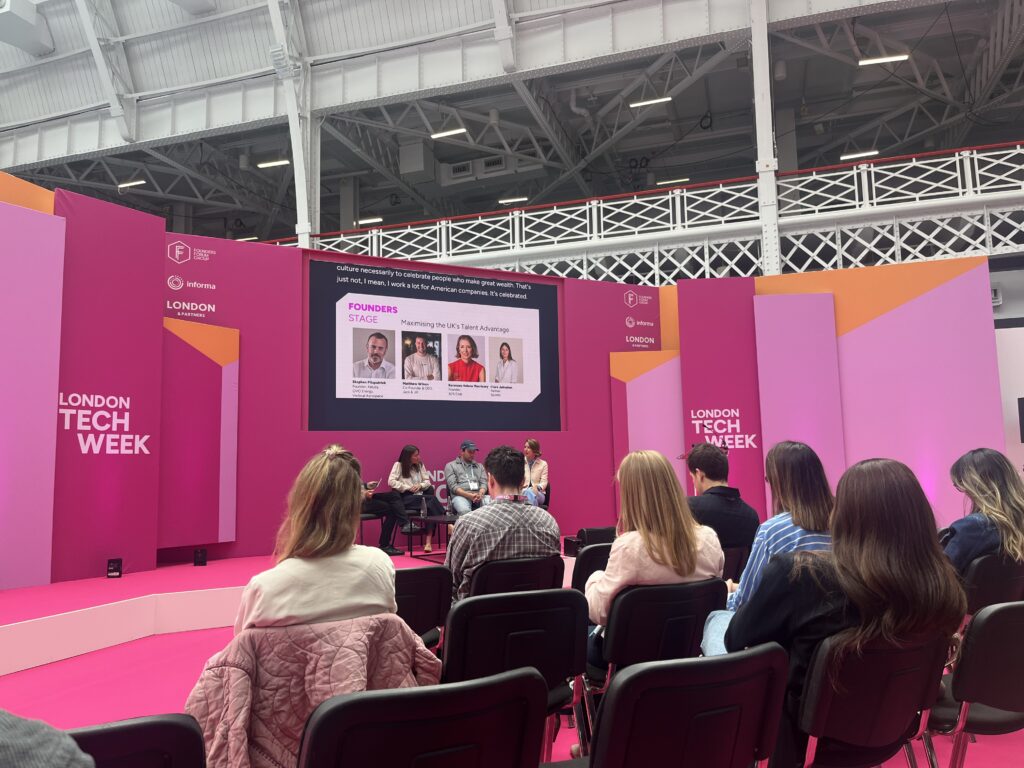
Hosted by Tracy Davies, Founder and CEO of Founders HR, the panel featured Ali Niknam, Founder and CEO of Bunq, Alex Taylor, Co-Founder and CEO of Hardest Adventures, and Marie Guyot, Founder of Scale Sustain.
One of the strongest insights came from Guyot, who challenged the common assumption that culture fundamentally changes as organisations grow. Instead, she argued that culture remains rooted in a consistent set of beliefs and behaviours. What changes is the infrastructure required to support it.
As organisations scale, informal communication and founder influence are no longer sufficient. Hiring processes, onboarding experiences, performance management frameworks and leadership behaviours become increasingly important mechanisms for reinforcing culture and maintaining organisational consistency. In many ways, culture becomes an operational discipline rather than simply a set of values.
This perspective is supported by Gallup’s ongoing research, which continues to identify manager behaviour as one of the strongest predictors of employee engagement, wellbeing and performance. Culture may be articulated through values, but it is reinforced through everyday leadership decisions.
Founders and leaders remain culture carriers
A recurring theme throughout the panel was the enduring influence of leaders on organisational culture.
Guyot described founders as permanent “chief culture officers”, arguing that employees pay closer attention to behaviour than they do to values statements or internal communications. Taylor echoed this view, describing culture as the actions employees take when nobody is watching.
The discussion reinforced a simple but often overlooked reality: culture is shaped less by what organisations say and more by what leaders consistently do. This becomes increasingly important as organisations grow and workforces become more distributed.
The observation mirrors findings from Edelman’s 2025 Trust Barometer, which found that employees continue to place significant importance on leadership transparency, consistency and authenticity when assessing organisational trust.
Hiring remains one of the most important cultural decisions
The panel also highlighted recruitment as one of the most powerful mechanisms for protecting culture during periods of growth.
Niknam explained that Bunq combines objective assessment criteria with a strong focus on cultural alignment, ensuring new hires contribute positively to both performance and organisational cohesion. His advice to founders was straightforward: “Don’t hire what you can get. Hire what you need.”
The comment resonated because many organisations face pressure to prioritise speed over quality when scaling. Yet poor hiring decisions become increasingly difficult to reverse as organisations grow. Research from McKinsey continues to demonstrate that talent quality and leadership effectiveness remain among the strongest predictors of long-term organisational performance, particularly during periods of transformation and growth.
AI will amplify culture, not replace it
Perhaps the most interesting connection between the two sessions was the relationship between AI and culture.
Rather than viewing technology as a replacement for culture, both discussions suggested that AI is more likely to amplify existing organisational strengths and weaknesses. Taylor argued that organisations benefiting most from AI are often those with adaptable cultures, strong leadership and employees willing to embrace change. Niknam similarly described AI as a tool that enables people to focus on higher-value work rather than repetitive tasks.
The implication is that AI adoption and organisational culture cannot be treated as separate conversations. Organisations with strong leadership, high trust and effective operating models are likely to realise greater value from AI than those struggling with engagement or cultural alignment.
The future workplace requires both technology and trust
Taken together, the two sessions offered a compelling perspective on the future of work.
AI is rapidly becoming embedded into how organisations operate, make decisions and serve customers. At the same time, leadership, trust, adaptability and organisational culture are becoming increasingly important enablers of transformation. Technology may provide the tools, but people determine whether change succeeds.
This creates a dual challenge. Organisations must continue building AI capability while strengthening the leadership behaviours, cultural foundations and workforce trust that enable transformation at scale.
The discussions at London Tech Week reinforced a reality reflected across workforce research globally. The organisations most likely to thrive over the next five years will not simply be those with the most advanced technology. They will be those that successfully combine AI adoption with strong leadership, resilient cultures and workforces that are prepared to continuously adapt and evolve.