Are We Measuring Productivity All Wrong?
- 3 Min Read
For decades, productivity has been measured by hours worked, time spent at a desk and output volume. But in an era of hybrid working and AI, these metrics are becoming increasingly disconnected from the value employees create.
- Author: HRD Connect
- Date published: Jul 28, 2026
- Categories
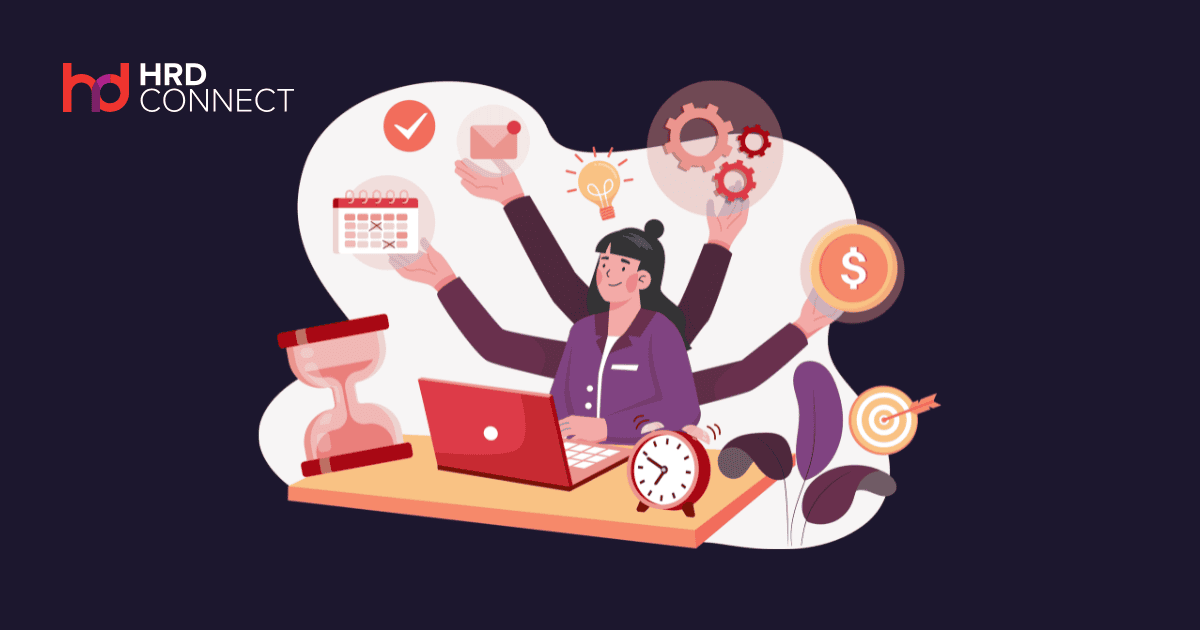
Technology is enabling people to complete tasks faster, automate repetitive work and focus on higher-value activities. As a result, organisations are beginning to rethink what high performance really looks like.
For HR leaders, the challenge is no longer measuring how much work gets done, but understanding the impact that work has on the business.
How we’ve measured productivity has changed
For much of the 20th century, productivity was relatively straightforward to measure. In manufacturing and industrial environments, organisations focused on tangible outputs such as the number of units produced per hour, sales made or customers served. Time spent at work closely correlated with value created.
As economies shifted towards knowledge work, however, those measures became harder to apply. Instead, many organisations defaulted to proxies such as hours worked, desk time, utilisation rates and, more recently, digital activity metrics including emails sent, meetings attended or time spent online.
The problem is that these measures often capture activity rather than impact.
An employee who attends back-to-back meetings or regularly works late may appear highly productive, while another who automates a repetitive process in an hour or solves a complex business problem may create significantly more value with far less visible effort.
Hybrid working has further exposed these limitations. Without employees physically present in the office, many organisations have been forced to question whether visibility was ever an accurate measure of performance in the first place.
AI is changing the definition of productivity
AI is accelerating the shift away from measuring effort towards measuring outcomes.
An employee who uses AI to complete a task in 30 minutes instead of three hours is not less productive because they spent less time working. Instead, they have created additional capacity to focus on higher-value work such as innovation, strategic thinking, relationship building or improving customer outcomes.
Microsoft’s 2025 Work Trend Index found that 53% of leaders say productivity must increase, yet many still rely on outdated measures that fail to capture the true value employees create.
Increasingly, organisations need to ask different questions:
- Did this work improve customer outcomes?
- Did it increase revenue or reduce costs?
- Did it improve a process?
- Did it strengthen collaboration or innovation?
- Did it create capacity for higher-value work?
These measures provide a more meaningful picture of organisational performance than activity alone.
HR has an opportunity to redefine performance
As AI becomes embedded across the workplace, HR has an opportunity to reshape how organisations define success.
Rather than measuring effort, organisations should focus on outcomes, quality, collaboration and continuous learning. Performance frameworks should recognise employees who improve processes, embrace new technologies and help others succeed, not simply those who appear busiest.
To make this shift, HR should:
- Set outcome-based goals linked to business results rather than hours worked.
- Track quality alongside output, using measures such as customer satisfaction, project delivery and process improvements.
- Measure AI’s impact by assessing how time saved is reinvested into higher-value work.
- Review productivity metrics regularly to ensure they reflect changing roles, technologies and business priorities.
Measuring what matters
As AI changes the nature of work, productivity can no longer be defined by time alone.
The organisations that gain the greatest advantage will be those that measure the value employees create rather than the hours they spend creating it. By redefining performance around outcomes, innovation and collaboration, HR can build workplaces that are both more productive and better prepared for the future.
Categories: Future of Work, AI, Performance Management