Five Is the New 15: Why Employers Are Starting the Talent Pipeline in Primary School
- 6 Min Read
BMW Group UK is introducing primary school children to engineering through its new Spark Lab. As Siemens Mobility and BAE Systems invest in similar outreach, should HR rethink where the talent pipeline begins?
- Author: HRD Connect
- Date published: Sep 24, 2026
- Categories
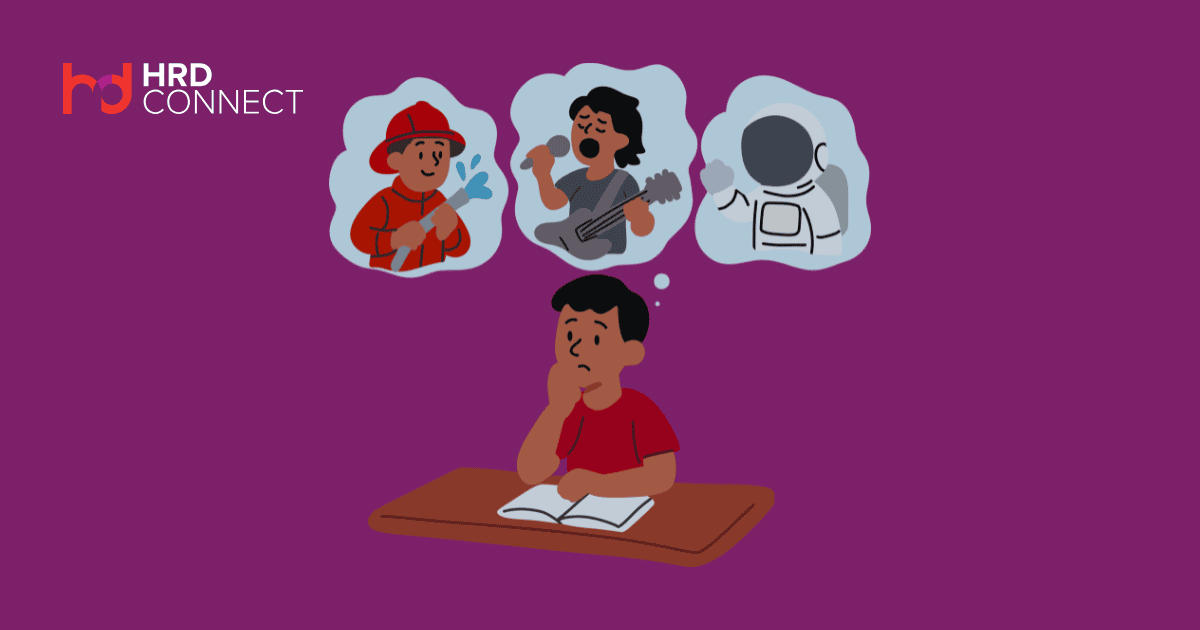
For most HR teams, early careers means apprentices, graduates and perhaps work experience students. BMW Group UK is challenging employers to think considerably earlier.
The automotive manufacturer has launched Apprentice 2036, including The Spark Lab, an electric vehicle engineering workshop aimed at five and six-year-olds. Children explored batteries, charging technology and electric vehicles while developing problem-solving, communication and creativity skills.
It might sound unusually early to start talking about careers. But BMW’s research suggests parents are already doing exactly that.
Among 2,000 UK parents who had begun thinking about their child’s future working life, 58% started when their child was between four and 11. Three in ten began when they were just four to six. By comparison, half of parents with children now aged 19 to 24 said they started thinking about careers when their child was 15 to 18.
For HR, the more interesting question is whether employers should be thinking about their future workforce just as early.
From recruitment pipeline to talent ecosystem
BMW is not alone in looking much further down the talent pipeline.
Siemens Mobility has worked with Primary Engineer for five years to bring practical engineering programmes into primary schools around its Goole Rail Village. Employees volunteer as STEM ambassadors, while pupils design, build and test miniature trains to make engineering more tangible from an early age.
BAE Systems takes a similarly long-term approach. Its education programmes begin from age seven and include employee STEM ambassadors, coding and robotics initiatives and a nationwide schools roadshow. The company says it engages more than 150,000 young people through different projects each year.
These initiatives point towards a different way of thinking about workforce planning. Instead of asking where an organisation will find engineers, technicians or digital specialists when vacancies appear, employers are trying to build awareness of those careers years before recruitment begins.
The distinction matters. A five-year-old does not need to choose a profession. But employers can influence whether children understand that different professions exist, what they involve and whether they can imagine themselves pursuing them.
Employers are competing for skills that do not exist yet
The urgency is understandable.
BMW’s research found 78% of parents expect AI to significantly change the jobs available to their children, while 49% do not know which skills their children will need. Almost three quarters, 72%, said they would feel more confident about their child’s future career if employers provided more information.
At the same time, the transition from education into employment is becoming harder.
The CIPD argues there is a growing disconnect between how young people move through education and how employers structure routes into work, driven partly by declining opportunities to gain experience alongside education, changes to apprenticeships and evolving recruitment practices.
Its August 2026 Labour Market Outlook also warned that subdued hiring is closing routes into employment for first-time jobseekers and weakening the talent pipelines organisations rely on to refresh their skills.
For HR leaders already worried about future skills, workforce planning therefore cannot only be about filling today’s vacancies.
But one workshop will not solve a skills shortage
There is an obvious risk that school outreach becomes little more than employer branding.
A memorable afternoon building an electric vehicle or miniature train might inspire a child, but it does not automatically create an engineer a decade later.
Research from EngineeringUK suggests repeated STEM experiences are more effective than one-off interventions. Its 2026 Sustained STEM Engagement Framework encourages employers to think about a young person’s entire journey, from early associations with STEM in primary school through to making education and career decisions later on.
That should change how HR evaluates these programmes.
Counting how many pupils attended a workshop or how many schools were visited tells employers about reach, not necessarily impact.
Instead, HR could ask whether programmes increase understanding of particular careers, improve confidence around STEM subjects, reach groups underrepresented in the existing workforce and eventually connect with work experience, apprenticeships and entry-level employment.
It also means outreach needs to be sustained. An employer that runs a primary-school workshop could later offer secondary-school career experiences, work experience placements and apprenticeship opportunities, creating a pathway rather than a collection of disconnected initiatives.
Early outreach needs to lead somewhere
That final step is particularly important because employers cannot solve long-term skills shortages simply by encouraging more children to become interested in their industries.
They also need accessible routes into those industries.
BMW currently has nearly 500 apprentices working across areas including manufacturing, engineering, automotive technology, marketing and communications. Since 2016, more than 3,300 apprentices have been supported across its UK business and retailer network, with the company reporting that 99% of apprentices at its production sites and head office move into full-time roles after completing their programme.
That connection between inspiration and employment is what gives initiatives such as Apprentice 2036 greater significance for HR.
The CIPD has highlighted young non-graduates as an important source of talent for addressing skills shortages and strengthening succession pipelines. If employers want those pipelines to become broader and more diverse, waiting until somebody is 18 to introduce them to an industry may already be too late.
HR needs to look further down the pipeline
A five-year-old attending The Spark Lab today will not solve an employer’s skills shortage next year. That is precisely the point.
Workforce planning usually works within relatively short horizons: what skills does the organisation have, what will it need and where will those people come from?
BMW, Siemens Mobility and BAE Systems suggest another question belongs in that conversation: who knows our industry is an option in the first place?
For HR, that means school outreach should not sit in isolation as a CSR exercise. It can form part of a longer workforce strategy connecting education, community engagement, employer branding, apprenticeships and recruitment.
But that requires employers to commit beyond a single workshop. The measure of success is not whether a child enjoyed an afternoon of engineering. It is whether repeated exposure gives more young people the knowledge, confidence and opportunity to consider careers they might otherwise never have encountered.
Perhaps the talent pipeline no longer begins with a job advert. It begins years earlier, with creating the curiosity that might eventually make someone want to apply.